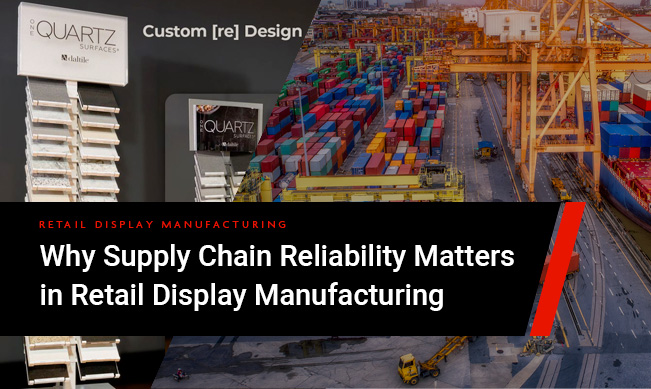
In retail display manufacturing, great design is only part of the equation. A display may look impressive on paper, but if it arrives late, ships damaged, misses components, or cannot be rolled out on time, the value of that design quickly drops. That is why supply chain reliability plays such an important role in the success of a retail display program.
For brands, retailers, and product manufacturers, display execution depends on much more than fabrication alone. It depends on dependable sourcing, realistic lead times, coordinated logistics, inventory planning, and consistent quality control from start to finish.
More Than Just Manufacturing
Retail displays often operate on tight deadlines. Many are tied to promotional calendars, seasonal campaigns, product launches, or store resets that cannot easily be delayed. If the display program falls behind, the brand risks missing an important sales opportunity.
This is why display manufacturing should never be viewed as an isolated production activity. It is part of a larger process that includes procurement, materials, scheduling, packaging, shipping, and store-level rollout.
A reliable supply chain helps ensure that all of these moving parts stay aligned. Without that reliability, even the best display concept can struggle to succeed.
Lead Times Affect Retail Performance
One of the biggest challenges in custom display programs is managing lead times. Materials may come from different suppliers. Production schedules may need to align across multiple departments. Shipping windows may be fixed by the retailer.
When timelines are not managed properly, delays can create a chain reaction. Production may be rushed. Shipping costs may increase. Install dates may be missed. The display may arrive too late to support the intended promotion.
Reliable supply chain management helps teams set realistic expectations early and maintain better control over deadlines throughout the project. It creates a stronger foundation for planning and helps reduce last-minute surprises.
Sourcing Matters More Than Many Brands Realize
Material sourcing is another critical factor. The type, quality, availability, and consistency of materials all affect the final display. A delay in one component can slow down the entire project.
This becomes even more important for custom displays that use mixed materials such as wood, metal, acrylic, corrugated components, or specialty finishes. These parts need to work together visually and structurally, and they need to arrive when production is ready.
A dependable supply chain includes established sourcing relationships, communication with vendors, backup planning when needed, and a clear understanding of how procurement affects the overall schedule.
Logistics Can Make or Break the Rollout
Even after production is complete, the job is not done. Displays still need to be packed, shipped, and delivered in a way that supports the retail program.
Some displays ship flat. Others require partial assembly, kitting, or retailer-specific labeling. Multi-location rollouts may involve regional distribution centers, direct-to-store delivery, or phased shipping schedules. If these logistics are not planned properly, problems can happen quickly.
Displays may arrive damaged. Components may be missing. Store teams may struggle with assembly. Delivery windows may be missed. These issues do not just create operational problems. They affect how the brand shows up at retail.
Reliable logistics planning helps ensure that the display arrives complete, protected, and ready for use.
Quality Control Supports Consistency
Supply chain reliability is also closely tied to quality control. A retail program may involve dozens, hundreds, or even thousands of display units. Each one must meet the same standard.
Consistency matters because retailers and brands expect the same performance from every display location. If one batch is strong and another is poorly finished or structurally weak, the retail experience becomes inconsistent.
Strong quality control processes help verify materials, dimensions, finishes, branding accuracy, and assembly readiness before displays leave production. This improves confidence and reduces the risk of costly problems later.
Need a display that balances durability and cost?
Our semi-permanent POP displays are designed to elevate product presentation while supporting promotions that run for weeks or months. Let GAVI design a solution tailored to your brand and retail environment.
Dependable Execution Builds Trust
For many brands, a display manufacturer is not just a vendor. They are part of the execution team behind a retail initiative. That means trust matters.
When a partner can deliver clear timelines, maintain communication, manage sourcing effectively, and support on-time rollout, they bring more value to the project. They help reduce stress, improve predictability, and support better results at store level.
This is especially important for complex retail programs where multiple departments, deadlines, and stakeholders are involved. Reliable execution allows marketing, sales, and operations teams to move forward with greater confidence.
Final Thoughts
In retail display manufacturing, success depends on more than design and production. It depends on whether the entire supply chain can support the project from concept through delivery.
Lead times, sourcing, logistics, packaging, quality control, and rollout planning all affect the final outcome. When these elements are managed well, brands are better positioned to launch on time, protect display quality, and create a stronger in-store presence.
A dependable supply chain is not just an operational advantage. It is a competitive advantage. For companies investing in custom retail displays, working with a partner that values reliability can make all the difference.